Historic Charm In Glens Falls: A Homebuyer’s Style Guide
June 18, 2026
June 18, 2026
If you love homes with original details, mature streetscapes, and a sense of history, Glens Falls deserves a close look. Buying an older home can feel exciting and a little overwhelming at the same time, especially when you are trying to balance charm with upkeep and budget. This guide will help you understand the architectural styles, maintenance realities, and market context that shape historic-home buying in Glens Falls. Let’s dive in.
Glens Falls has a long-established built environment, and many of its most intact historic resources date from about 1830 to 1930. That long stretch of development helps explain why you can still find homes with distinctive period details, varied facades, and older lot patterns across parts of the city.
The city’s historic identity is especially visible near the Three Squares Historic District. This 23-acre area includes the downtown commercial, civic, and religious center, while residential areas with larger homes on deep lots developed to the west and north.
Historic preservation is also part of the local culture, not just a niche interest. Glens Falls is locally framed as an Arts, Wellness, and Entertainment District, and the city supports historic interpretation through its historian page and self-guided walking tour.
When buyers talk about “historic charm” in Glens Falls, they are usually describing a mix of architectural styles rather than one uniform look. That variety is part of what makes the city appealing if you want something with personality.
Victorian-era homes in Glens Falls often include several late-19th-century styles. Local historic records highlight Italianate, Second Empire, Queen Anne, Eastlake, Romanesque, and transitional examples.
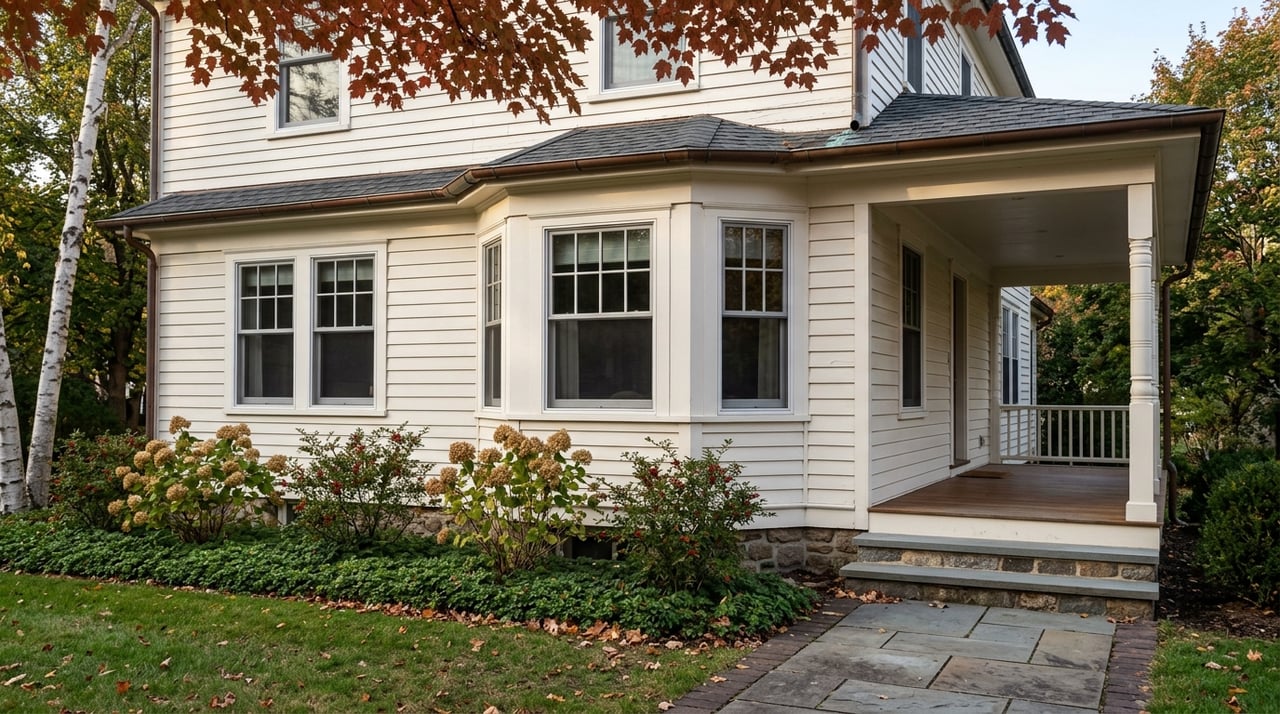
Italianate homes often have low-pitched roofs, bracketed eaves, tall first-floor windows, and arched details. Second Empire homes are usually easiest to spot by their mansard roofs. Queen Anne homes tend to be more expressive, with bays, towers, varied wall surfaces, and mixed textures or materials.
If you want a home that stands out from the street, this is often the category to watch. These homes can offer strong visual character, but they may also come with more exterior details to maintain over time.
If your taste leans more balanced and traditional, Colonial-inspired homes may be a better fit. In Glens Falls, the classic Colonial look is usually Colonial Revival or Georgian Revival.
These homes are often symmetrical, with centered front doors, double-hung sash windows, and details like pediments or fanlights. They can feel a little more restrained than Victorian homes, which many buyers find appealing if they want character without a highly ornate exterior.
Mid-century homes are often the cleanest-lined option in the local mix. This style typically emphasizes flat roofs, larger windows, smoother wall surfaces, and minimal ornament.
For you as a buyer, that can translate to a simpler exterior appearance and a more open, functional feel. If you appreciate older homes but prefer less decorative styling, mid-century design may offer the best middle ground.
It is easy to fall in love with curb appeal first, but the better question is how a home’s style fits the way you actually live. A beautiful exterior matters, but so do maintenance needs, renovation plans, and your comfort with older-house quirks.
Victorian-era homes may be the right match if you enjoy ornate trim, unusual shapes, and standout architectural features. They often deliver the strongest sense of individuality.
At the same time, more decorative features can mean more upkeep. If you are considering this style, it helps to go in with realistic expectations about ongoing maintenance and periodic specialty work.
Colonial Revival homes can be a strong fit if you want historic character with a more orderly, classic look. Their design tends to feel familiar and timeless.
For many buyers, that balance makes these homes easier to personalize over time. You may still be buying an older property, but the style often reads as a little more straightforward.
Mid-century homes may appeal to you if you value cleaner lines and a less ornamental design. They can feel more practical and visually uncluttered.
That does not automatically mean lower maintenance, but it may mean fewer decorative exterior elements to preserve. For some buyers, that is a major advantage.
Historic charm usually comes with a different maintenance profile than a newer home. In Glens Falls, local climate and building conditions make that especially important to understand before you buy.
NOAA climate normals for Glens Falls show an annual mean temperature of 45.7 degrees, annual precipitation of 38.21 inches, and a winter mean of 22.7 degrees. The city’s building design criteria also list a 50 psf ground snow load, a 48-inch frost line, a 115 mph wind design speed, and required ice-barrier underlayment.
For buyers, that points to a few practical areas worth watching closely:
These items matter in any home, but they can be especially important in older properties where original materials or past repairs may affect performance.
Many older homes may fall into the pre-1978 category, where lead paint can be a concern. If renovation, repair, or painting is part of your plan, lead-safe work practices matter because those projects can create lead dust.
This does not mean every older home is a problem. It means you should ask informed questions and plan carefully if you expect to update painted surfaces after closing.
With historic exteriors, preservation guidance generally favors repair over blunt replacement when feasible. That includes repointing masonry with compatible mortar and preserving original wood windows or roof materials where appropriate.
For you, the takeaway is simple: a historic home budget should leave room for occasional specialist work. These homes are not always the best fit if you want a fully turnkey, low-maintenance experience.
If you are already thinking about exterior changes, it is smart to learn the local process early. In Glens Falls, Building and Codes is the local office for permits, inspections, and code questions.
That can save you time and frustration later, especially if your post-closing plans involve repairs, updates, or exterior improvements.
Buyers drawn to historic character often start with downtown and the Three Squares Historic District. This area represents the city’s historic center and includes 77 contributing structures within a 23-acre district.
That said, the district is not primarily a single-family residential area. Because it is largely commercial, civic, and religious in character, buyers often end up looking just outside it for residential blocks that still offer an older, historic feel.
If you want walkable urban character and proximity to the city’s historic identity, areas near downtown are often the strongest fit. Inventory in the downtown core and the district itself appears limited, so patience may be important.
This can also affect competition when a well-located character home becomes available. Buyers who know what features matter most to them are often in a better position to act decisively.
The East End is another area worth watching because heritage, housing, and redevelopment are intersecting there. The city’s East End Rising and Warren Street brownfield opportunity area efforts reflect ongoing investment and planning activity.
For buyers, that makes the East End a place to watch for changing land use, older building stock, and future neighborhood evolution. It is a good reminder that buying a historic-feeling home is also about understanding where a neighborhood may be headed.
At the city level, recent market data generally clusters in the upper-$200,000s, even though the exact figure varies by source. Zillow places the average Glens Falls home value at $269,368 and the median list price at $289,767. Redfin reports a March 2026 median sale price of $276,050, while Realtor.com reports a median listing price of $286,450, about 53 homes for sale, and a 101 percent sale-to-list ratio.
The big takeaway is that Glens Falls remains a fairly competitive market. If you are shopping for a home with style and location appeal, it helps to be prepared for limited options and quick decisions.
For added context, ZIP-level pricing shows variation around the city. Realtor.com reports about $286,450 in 12801, $335,000 in 12803, and $549,000 in 12804. Nearby comparisons from Zillow place values around $310,000 in West Glens Falls and $370,000 in Glens Falls North.
In practical terms, homes closer to the historic core are more likely to land in the upper-$200,000s to low-$300,000s. Larger-lot or more suburban comparisons tend to move higher.
When you tour an older home in Glens Falls, style should be only one part of the conversation. A few targeted questions can help you look past surface appeal and make a more confident decision.
Consider asking about:
These questions can help you compare homes more clearly. They also make it easier to estimate what ownership may look like after closing, not just what the house looks like on showing day.
Historic and older homes can be deeply rewarding to own, but they usually require a more thoughtful buying process. You are not just evaluating square footage and finishes. You are also weighing architecture, maintenance, location, and future improvement plans.
That is where local market insight matters. A buyer-focused approach can help you sort through tradeoffs, compare neighborhoods, and stay realistic about both budget and upkeep.
If you are exploring Glens Falls and want help finding a home that fits your style and your day-to-day needs, Dina Coluccio-Weinman can help you navigate the market with clear, local guidance.
Stay up to date on the latest real estate trends.
Dina Coluccio-Weinman pairs New York market insight with a results-driven approach. Known for her integrity, strategic mindset, and personalized service, she guides clients through every step, making each buying or selling journey smooth, successful, and stress-free.