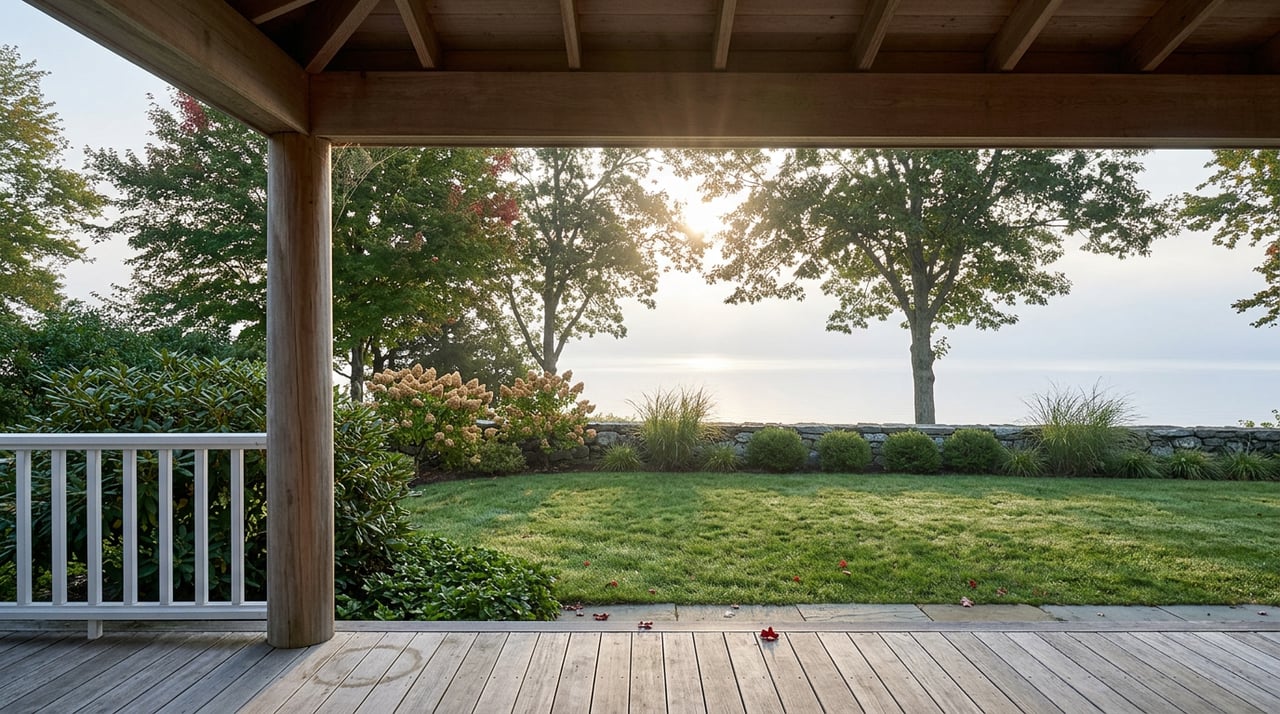
Why Every Lake George Closing Now Runs on a Septic Clock
August 27, 2026
August 27, 2026
"They think about what's in their septic tank and what's in the Lake." That was Joe Thouin, deputy director of the Lake George Park Commission, explaining in 2024 why homeowners were cooperating with a program most of them had never heard of a year earlier. He wasn't talking to buyers or sellers. He was talking about compliance. But for anyone shopping the Lake George shoreline in 2026, that sentence describes something more specific than civic goodwill: it describes a piece of due diligence that exists nowhere else in the region, and that most out-of-area buyers still don't know to ask about.
Here's the thing most septic guides get wrong when they talk about waterfront property. They treat the septic system as a private matter between buyer, seller, and a home inspector, something you find out about during due diligence and then negotiate over. At Lake George, that's backwards. The system's status is already a matter of public record before you ever write an offer, because the Lake George Park Commission has been working through a mandatory, parcel-by-parcel inspection schedule since May 2023. By now, in the fourth year of a five-year cycle, a majority of the properties this program covers already have a documented pass, fail, or repair status on file. The question isn't whether the information exists. It's whether you looked it up before or after you were under contract.
The program covers roughly 2,500 septic systems basin-wide, out of about 6,000 total, defined as any system within 500 feet of Lake George's shoreline or within 100 feet of a mapped tributary stream. The Commission is working through that population in five annual waves of about 500 systems each, running 2023 through 2027. Do the math on today's date and you land somewhere in year four. That means roughly three of the five inspection cohorts, somewhere in the neighborhood of 1,500 properties, should already carry a documented result.
For a buyer, that changes the calculus entirely. You're not asking "does this house have a septic problem." You're asking "has the state already looked, and what did they find." The Commission maintains a public map showing which properties fall in the program and which year they're scheduled for, and a seller who has already been through an inspection cycle should be able to produce records rather than guesses. If a property hasn't come up yet, that's useful information too. It tells you the clock is coming, not whether it exists.
The first full season of inspections, run between April and October of 2023, covered 330 to 371 systems depending on which report you read, and the results were rougher than the Commission expected. About 46 percent passed outright. Roughly 23 percent failed, meaning the system was actively discharging untreated or partially treated wastewater, often from an old cesspool or a metal tank that predates current standards. The remaining 31 percent split between systems needing minor repairs and systems flagged as substandard, meaning undersized or too close to the water for the treatment the DEC requires.
| Outcome | Share of Year 1 inspections |
|---|---|
| Passed | 46% |
| Needed repairs | 16% |
| Substandard | 15% |
| Failed | 23% |
Commission deputy director Joe Thouin, who oversees the inspection program, called the failure rate higher than anticipated, and executive director Dave Wick said the numbers alone justified the program's existence. It's worth sitting with what that means for a shoreline that's been developed for over a century. A meaningful share of the systems built decades ago, sized for smaller seasonal cottages and now serving year-round households, simply weren't built to hold up under the scrutiny this program applies. If you're touring a listing built before the 1980s and the seller can't produce a septic record, that's not a paperwork gap. Statistically, it's closer to a coin flip on whether the system would pass today.
This is where the program stops being an environmental story and starts being a transaction story. A system classified as Failing under Commission regulation gets a compliance deadline that cannot exceed six months from the date of the failed inspection. A system classified as Substandard, which usually means it's functioning but undersized or too close to the shoreline, gets up to five years. Those are two very different timelines to inherit, and here's the detail that catches people off guard: the obligation attaches to the property, not the person who owned it when the letter arrived.
If a seller's system failed inspection eight months before closing and hasn't been replaced yet, the six-month clock doesn't reset because the deed changed hands. The next owner inherits whatever time is left, along with the requirement to keep pump-out and repair records on file for the life of the system and produce them to the Commission on request. This is fundamentally different from how septic disclosure works almost everywhere else, where the obligation is a one-time written statement and the buyer's leverage comes from what their own inspector finds. At Lake George, the leverage comes from checking a government schedule that already exists.
A few towns have layered on stricter rules of their own. Bolton, for instance, adopted a local law in 2021 requiring any homeowner seeking a variance to install or replace a septic system to use an Enhanced Treatment Unit, and mandating ETUs for every island home in town regardless of lot size or distance from the water. If you're looking at an island property or anything in Bolton specifically, that's worth confirming before you fall in love with the dock.
The practical version of all this is short. Before submitting an offer on shoreline or near-shore property, ask the seller or listing agent three things: whether the parcel falls within the Commission's critical environmental area, what year it was or will be inspected, and whether they can produce the resulting pass, repair, substandard, or fail determination. If the system already passed, you've eliminated a real risk that a generic home inspection wouldn't necessarily catch, since a standard visual inspection isn't the same as the Commission's pump-out-and-diagram process. If it's scheduled for this year or next, build that timeline into your ownership plan rather than treating it as someone else's problem you inherited by accident.
If a system already failed, the financial conversation shifts from theoretical to immediate. Replacement costs vary by lot and soil conditions, but the region has real financing support built specifically for this. Warren, Washington, and Essex counties, through a New York State program, offer grants up to $10,000 toward septic repair or replacement. The Lake George Association also partners with Glens Falls National Bank and Adirondack Trust Company to offer no-interest or low-interest loans for qualifying property owners through its SafeSepticSystems.org initiative. None of that changes who's responsible for the fix. It does mean the fix doesn't have to come entirely out of pocket at closing.
Does this apply to every home in the Lake George area, or just waterfront? Only properties within 500 feet of the lake's shoreline or 100 feet of a Commission-mapped tributary fall under the mandatory five-year inspection cycle. Homes farther inland still need a pump-out at least once every ten years under the same regulation, but they're not on the recurring inspection schedule.
If I already had a private septic inspection done, does that satisfy the requirement? The Commission's regulation calls for inspection by Commission staff or a Qualified Wastewater Inspector expressly authorized for certain proprietary systems. Queensbury and the Town of Bolton run their own recognized transfer-inspection programs that the Commission accepts in place of its own. Outside of that, a private inspection is useful information for your own due diligence but doesn't substitute for the Commission's scheduled visit.
Can septic repair costs be rolled into a mortgage? That depends on your lender and loan program, and it's a conversation for your mortgage professional rather than something to assume going in. What's specific to this market is that county grant funding and local low-interest loan programs exist alongside whatever your lender offers, so it's worth asking about both before assuming a repair has to be self-funded.
What happens if the system fails after I've already closed? The six-month compliance clock starts from the date of documented failure, not the date of purchase. If you buy a property where the system already failed and hasn't been fixed, you're taking on whatever time remains on that clock as the new owner of record.
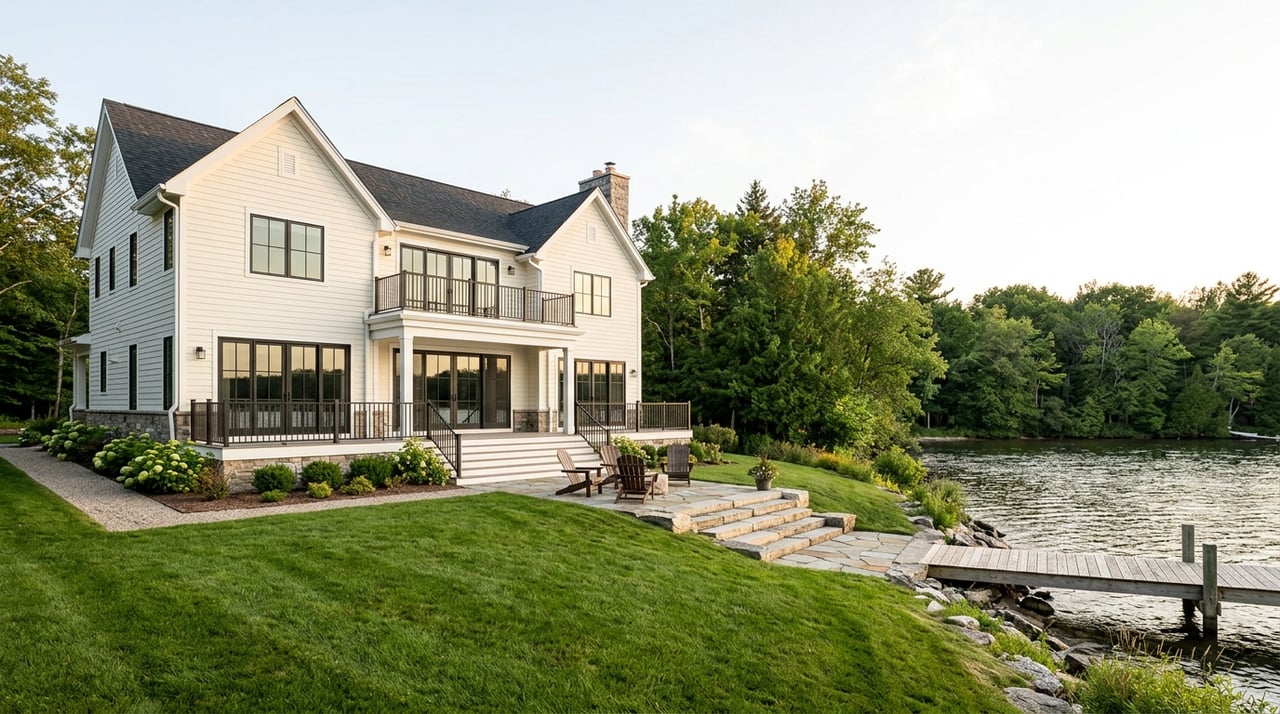
Buying or selling on Lake George means paying attention to a regulatory layer that simply doesn't exist on inland listings in the region, and the properties that handle it best are the ones where someone checked the record before the offer went in, not after. If you're weighing a purchase or a sale on the lake and want help reading a specific parcel's history before you commit to anything, Dina Coluccio is a good place to start that conversation. Let's Talk.
Stay up to date on the latest real estate trends.




Dina Coluccio-Weinman pairs New York market insight with a results-driven approach. Known for her integrity, strategic mindset, and personalized service, she guides clients through every step, making each buying or selling journey smooth, successful, and stress-free.