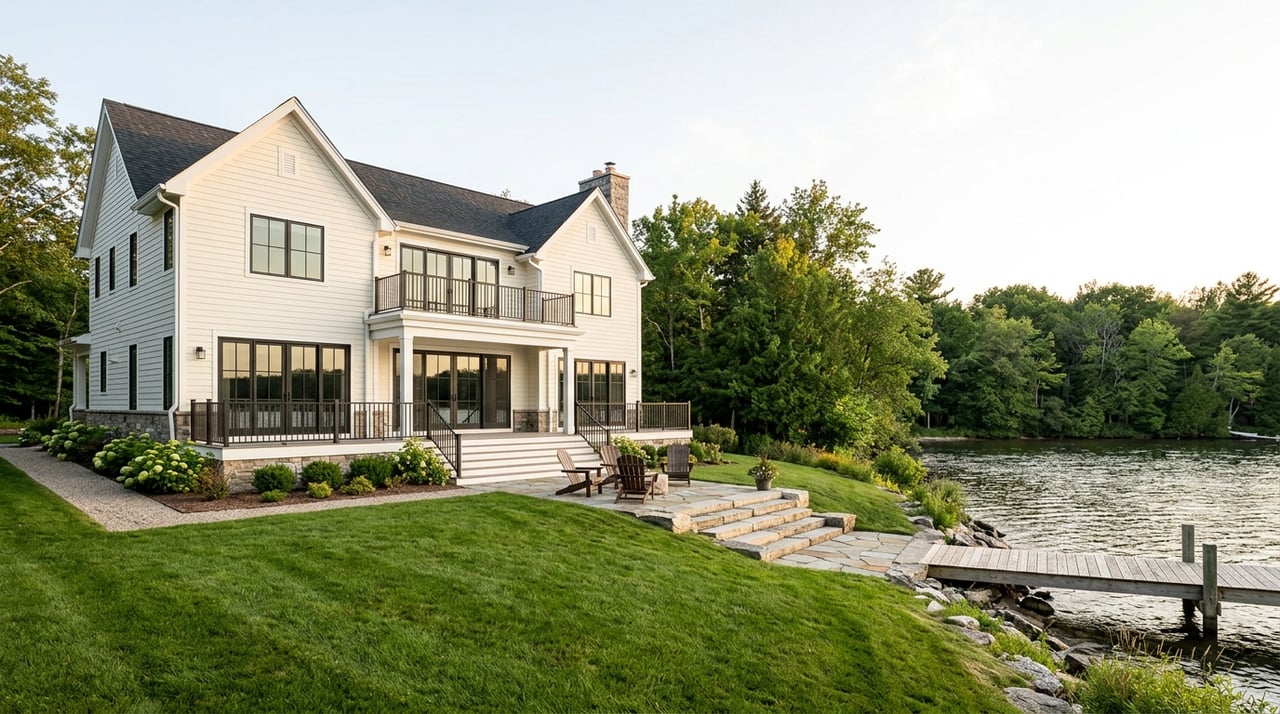
Buying a Waterfront Home in Lake George: Key Access Tips
July 23, 2026
July 23, 2026
Thinking about buying near Lake George? The view may be the easy part. The harder part is knowing whether a home gives you true waterfront ownership, shared lake rights, or simply a great location close to public access. If you want to buy with confidence, it helps to understand what those differences mean for price, rules, and long-term costs. Let’s dive in.
In Lake George, not every "lake" property offers the same rights. Two homes may both be marketed around the lake lifestyle, but one may include actual shoreline frontage while the other may offer only deeded access or proximity to a public launch.
That distinction matters because your rights to swim, dock a boat, or make improvements can vary a lot from one property to another. Before you fall in love with the setting, make sure you understand exactly what kind of access comes with the home.
Direct waterfront homes include shoreline frontage as part of the parcel. In general, this is the clearest form of lake ownership and usually gives you the strongest claim to private water use.
Recent Lake George examples show how premium this category can be. One listing was described with 178 feet of lakefront at $4.25 million, while another newly completed waterfront estate with 120 feet of frontage was listed at $7.249 million.
A lake-access home is off the shoreline but includes a legal right to use the lake. That right may come through a deeded easement, beach right, dock right, or an association arrangement.
This category can vary widely. One recent example was listed at $875,000 and sat about 325 feet from deeded water access, while another was listed at $1.075 million with deeded access, beach access, a boat dock, and annual HOA fees.
Some buyers do not need private lake rights to enjoy Lake George. If your goal is occasional boating, swimming, or being close to village activity, a home near public access points may be the better fit.
Lake George has several public access options identified by New York State. These include Million Dollar Beach in the village area, Rogers Rock at the north end, and other launches such as Northwest Bay Brook and Hague Town Beach, with some launches operating seasonally and Rogers Rock open year-round.
Waterfront homes in Lake George often command a premium over the broader market. Recent online market snapshots suggest that direct waterfront tends to carry a higher entry price than a typical Lake George home.
One recent snapshot showed a median listing price of $999,000 for waterfront homes, while a broader Lake George market overview showed a median listing price of $699,000. The datasets are different, so the numbers should be viewed as directional, but the pattern is still useful.
If private frontage is essential to you, be prepared for a narrower inventory and a higher starting price. If it is not essential, a deeded-access or public-access-nearby home may give you the lake lifestyle at a lower cost.
The asking price is only part of the picture with Lake George properties. Your long-term costs may change significantly depending on the type of access, the condition of the property, and the rules that apply to the parcel.
For many buyers, the biggest surprise is not the sale price. It is the ongoing cost of maintaining water-related features, complying with local requirements, and carrying the right insurance.
On Lake George, a dock, wharf, or mooring cannot be used unless it is registered with the Lake George Park Commission. Each must be registered on or before April 1 every year.
The current Commission fee schedule sets a $50 annual fee for a residential dock, wharf, or mooring. Association docks are assessed $50 per unit or vessel-equivalent, whichever is less.
Septic is another major issue to review carefully. The Lake George Park Commission requires pump-outs no less than once every ten years, or every five years for systems in the inspection program.
New or replacement systems are also subject to stricter design standards, including tighter setbacks from the lake and added review when a system is not compliant. On a waterfront or lake-access purchase, septic status should be part of your due diligence from the start.
Insurance near the water may be more complex than buyers expect. New York's Department of Financial Services notes that flood damage is generally not covered by standard homeowners or tenants policies.
That means a home near the lake may carry added insurance costs if flood coverage is needed. When you are building a monthly budget, it is smart to think beyond principal, interest, taxes, and standard homeowners insurance.
Association fees can apply even when a home is not directly on the shoreline. In one recent Lake George example, a deeded-access home had annual HOA fees of $1,891, with insurance and snow removal included.
Those fees may be worth it if they support the kind of access you want. Still, they should be weighed alongside your mortgage, taxes, insurance, and seasonal lake-related expenses.
Lake George is not a market where you should assume you can add or change shoreline features later. The local rules are more restrictive than what many buyers expect.
The Lake George Park Commission designates the waters of Lake George, the land under the lake, and land within 500 feet of the mean high-water mark as a critical environmental area. That creates more review for shoreline work, dock changes, wastewater decisions, and some waterfront improvements.
Docks and moorings are not informal additions on Lake George. The Commission requires a permit before anyone constructs, alters, enlarges, or expands a dock, wharf, or mooring.
Application rules also state that size, placement, configuration, and number are limited by the amount of lakefront owned. Depending on the property, other approvals may also be needed from state, federal, park, or local zoning authorities.
If you plan to trailer a boat in and out of Lake George, inspections are part of ownership. The Lake George Park Commission says all trailered boats launching into the lake must be inspected for aquatic invasive species at one of its regional inspection stations.
The inspection and any needed decontamination are provided at no cost. This is especially important if your dream home includes a dock or if boating is a big part of how you plan to use the property.
For some buyers, private frontage is more than they really need. If you will only use the lake occasionally, public access may offer a more affordable path to enjoying Lake George.
The New York State Department of Environmental Conservation lists Million Dollar Beach as a hard-surface launch with 54 car-and-trailer spaces from Memorial Day through Columbus Day, plus additional parking the rest of the year. Rogers Rock also offers a hard-surface launch with 24 car-and-trailer spaces and is open year-round.
A home near these areas may give you easier access to the lake without the cost and responsibility that come with owning shoreline. That can be a smart tradeoff if flexibility matters more than exclusivity.
In Lake George, the most important question is not whether a listing says waterfront or lake access. The real question is what legal rights are actually being conveyed.
A careful review upfront can help you avoid expensive surprises later. Before making an offer, ask for clear answers to the details that shape both value and usability.
The best Lake George property for you depends on how you actually want to use the lake. If you want maximum control and private shoreline use, direct waterfront may be the right choice, but it usually comes with the highest purchase price and carrying costs.
If you want a balance between access and budget, deeded-access homes may offer a middle ground, though the details can vary a lot from one property to the next. And if being near the water is enough, a home close to public access may let you enjoy Lake George without paying a full waterfront premium.
When you compare options carefully, the right decision becomes clearer. If you want help weighing frontage, dock rights, HOA rules, septic status, and the true cost of ownership, reach out to Dina Coluccio-Weinman for local, consultative guidance.
Stay up to date on the latest real estate trends.
Dina Coluccio-Weinman pairs New York market insight with a results-driven approach. Known for her integrity, strategic mindset, and personalized service, she guides clients through every step, making each buying or selling journey smooth, successful, and stress-free.